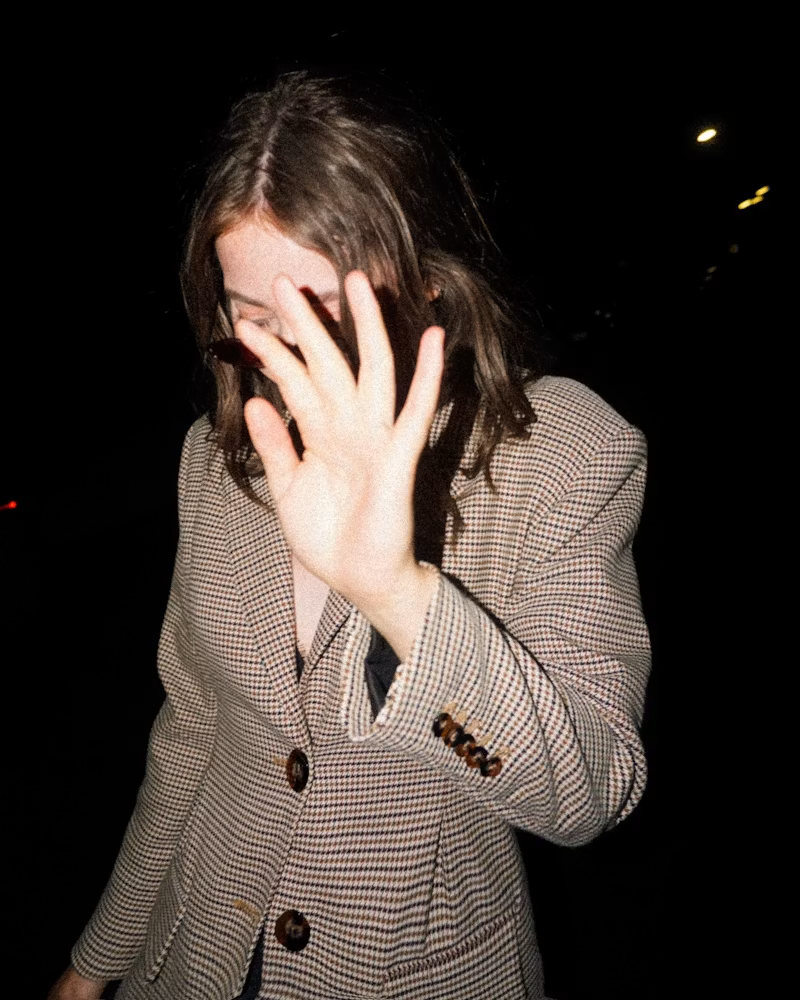

When I think about the future of workwear, I picture a closet full of possibilities. The idea of getting dressed for work has always carried a sense of uniformity. Suits, ties, pencil skirts and business casual outfits that blur into one another. But talking to other students about what they imagine wearing in their own careers showed me something different. The future of workwear isn’t just about dress codes; it’s about identity, practicality and the quiet rebellion of making professional style personal.
Take Brayden Porterfield, a sophomore fashion design student, for example. He sees himself working in a fashion atelier but doesn’t envision himself as the most fashionable person in the room.
“Black slacks, black tops, black leather shoes,” he said. “Buying everything in one color means everything matches.”
For Porterfield, simplicity is survival. An all-black uniform signals seriousness while also keeping mornings stress-free. It’s a reflection of how, sometimes, what we wear to work isn’t about being expressive but about being taken seriously.
For Corinne Stanuch, a sophomore fashion merchandising student, her vision is almost the opposite. She describes her future style as “polished and classy,” but with bold colors and playful patterns woven in. For her, professionalism doesn’t mean leaving creativity behind. In fact, she sees her wardrobe as an extension of her role in the industry.
“Fashion is about self-expression, so why would I want to mute that when I’m at work?” she said. Stanuch imagines a workplace where being creative is synonymous with being professional.
Then there’s Nate Campbell, a sophomore double-major in fashion design and fashion merchandising, who wants to work in the creative or marketing side of fashion. Campbell resists the idea of blending in.
“One of the biggest pulls I had to working in fashion was because of how important it is to dress in a way that feels authentic to myself rather than having to put on a uniform to fit in,” he said.
For Campbell, workwear could mean a vintage three-piece suit one day and jeans with layered jewelry the next. His outlook reflects a wider shift in culture: dress codes are loosening, individuality is encouraged and the office no longer dictates the wardrobe.
Isabella Boehmke, a junior fashion design student, approaches the future with a softer, more personal lens. She envisions linen pants and flowy shirts – clothes that feel comfortable but still put-together.
“I’m not a very fancy dresser,” she said, “but I like subtle details: my jewelry, my accessories, even the story behind the clothes I wear.”
For Boehmke, workwear is as much about confidence as it is about clothes. She hopes the future of professional attire makes room for tattoos, piercings and self-expression that has long been labeled “unprofessional.”
The definition of professionalism is changing. For some, like Porterfield, it’s about being efficient and taken seriously. For others, like Stanuch and Campbell, it’s about self-expression and creativity. For Boehmke, it’s about comfort, subtlety and reclaiming identity in spaces that once demanded conformity.
The big picture? Workwear is shifting away from uniformity and toward individuality. A suit might still be the right choice for some, but for others, professionalism could look like bright colors, vintage thrift finds or flowy linens. As trends evolve and workplaces become more inclusive, the rules of workwear are less about what you must wear and more about how you want to be seen.
Maybe that’s the future of workwear: an embrace of difference. A recognition that professionalism doesn’t have to erase personality. We can wear black head-to-toe, or bright patterns, or old suits pulled from thrift stores and still show up as ourselves.
Because at the end of the day, workwear isn’t just about looking employable. It’s about showing the world who we are, even on the clock.
Support Student Media
Hi! I’m Hannah Planey, A Magazine’s editor-in-chief. My staff and I are committed to bringing you the most important and entertaining news from the realms of fashion, beauty and culture. We are full-time students and hard-working journalists. While we get support from the student media fee and earned revenue such as advertising, both of those continue to decline. Your generous gift of any amount will help enhance our student experience as we grow into working professionals. Please go here to donate to A Magazine.