My personal style has changed a lot since starting fashion school, not in a dramatic “new era” kind of way, but in a slow, practical, almost logical way. When I moved out at eighteen and was living in a new city alone for the first time, I finally had the space to figure out who I was without being influenced by the people I grew up around.
That was the first time I could really experiment without anyone’s opinions in the background, and a lot of that experimenting happened through my clothes.
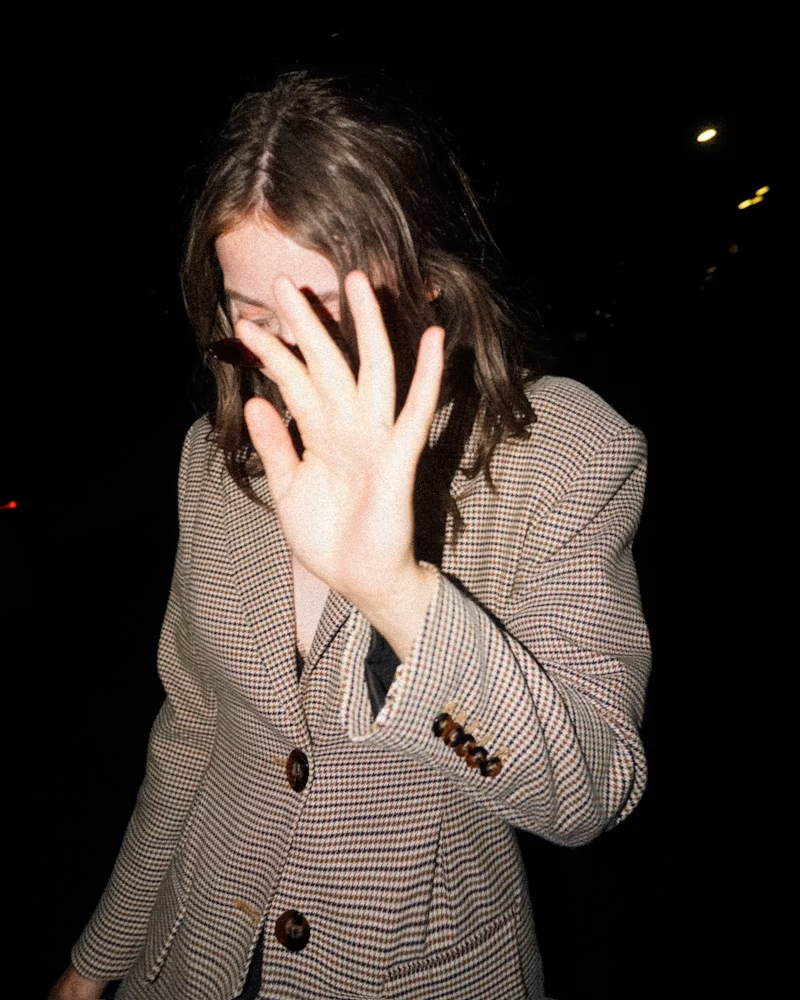
Now, a few years into my degree, and after working in textiles and fashion, I’ve shifted toward something much cleaner and more professional. I’ve gotten really comfortable in business casual: slacks, button-ups, darker denim, black and white – outfits that look put together without trying too hard.
It’s not because I feel pressured to “look like” a fashion student, but because I actually want to show up like someone who’s entering the industry. I feel the most confident when I look put-together.
It’s ironic because I used to refuse to repeat outfits, and now I end up wearing the same combinations on a weekly basis. I’ve learned how to keep my alt side in the mix without losing the cleaner look I prefer now.
As I started noticing these changes in myself, I got curious about how other fashion students experienced their own shifts in style, especially because everyone I know has their own personal aesthetic. What surprised me is how many of us, for being so different, ultimately hold similar opinions about style.
One thing I noticed while talking to other students is that your style doesn’t change all at once, your eye changes first. You start noticing things you never paid attention to before: proportions, fit, finishings, references, intention. That shift alone starts to influence how you dress.
Everette Schutt, a senior fashion design student, summed it up cleanly.
“My sense of fashion evolved as I grew as a designer,” he said. “As I was building my designer identity, that’s when I really started to play around with what I was wearing.”
Schutt explained that, as his eye sharpened, his standards shifted.
“Now that I’m more keen on noticing silhouettes, I try to replicate silhouettes I think are successful,” he said. “You just notice things in outfits you never noticed before.”
Schutt said he started paying attention to designers he resonated with, and that awareness influenced his shopping habits. He began seeking pieces that subtly signal design literacy, “pieces that stand out among the crowd of like J. Jill, Gap and Talbots.”
Zane Cyler, a sophomore fashion design student, experienced the same awakening but through confidence and exposure.
“It changed because I got more comfortable seeing other people around me dressing out there and being confident. It made me more confident,” he said.
And once Cyler started learning how garments are actually made, everything clicked.
“Before, you’re just like, ‘Okay, this is a nice shirt,’ but now you’re like, ‘Wow, this little t-shirt took this much time to put together,’ he said.”
Suddenly, a t-shirt isn’t simple. It’s a time commitment.
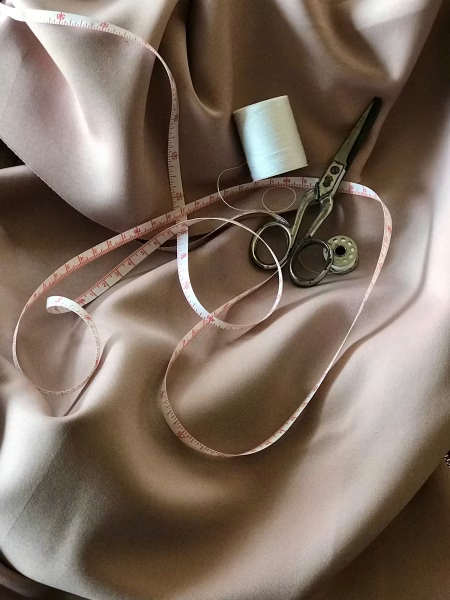
One of the biggest changes that happens in fashion school is that your relationship to clothing shifts on every level. Once you learn construction, you stop seeing garments as just clothes and begin noticing the intention, effort and meaning behind them.
For Schutt, that shift was immediate.
“My sense of fashion evolved as I grew as a designer,” Schutt said.
Construction courses sharpened his standards to the point where he changed the way he shops entirely.
“I’ve completely cut out anything that’s polyester,” Schutt said.
Clean finishes, thoughtful seam work, bias binding, those details matter more to him now than any trend. He looks for evidence of care.
Simon Schaffner, a University of Cincinnati DAAP graduate, had a different angle entirely. His shift wasn’t about construction, it was about concept.
“When I was working on big design projects, I kind of adopted a different way of seeing the world temporarily,” he said, explaining that his capstone, focused on articulation, changed what he gravitated toward in clothing.
“During that time, I felt like I had a whole new way of seeing things,” Schaffner said.
His understanding of design reshaped how he thought about fashion as art versus fashion as daily wear.
“When I first got into fashion, I wanted my clothes to feel like an art piece,” Schaffner said. “But now I think what makes design unique is that it’s aesthetics applied to function. A shirt is a shirt; buttons, seams, everything coming together, and you want to see clothing embody what it’s supposed to be in an interesting way, not just be interesting on its own. It has to make sense in the context of what it is, not just be a display of creativity.”
Together, these ideas pulled him toward a subtle, more intentional way of dressing because he developed a deeper respect for what makes good design meaningful.
Even Judah Miller, a sophomore fashion design student who insists his personal style hasn’t changed much, said, “Learning construction just made me see the effort, the time, and the thought that goes into everything.”
That tension between clothing as a medium and clothing as a practical part of your day is something almost every fashion student works through. Schutt said he entered school thinking it was “just clothes,” but quickly learned how complex the field actually is.
“It is an arts major,” Schutt said. “It involves architecture, too, there are so many facets.”
For him, fashion school made him see himself as an artist for the first time.
“It’s not just my designs. It’s my art that I’m putting out there to be critiqued,” he said.
That’s the thing about fashion school, it doesn’t force you to reinvent yourself, but it does force you to see. And once you do see … you can’t unsee.
When you talk to fashion design students about minimalism or maximalism, you don’t get confusion or contradiction, you get clarity. Everyone knows exactly where they lean, but the reasons behind those choices are what make things interesting.
No one in these conversations was performing a trend or trying to fit into an aesthetic category. It was more about what feels right for their personality, their workflow and the version of themselves they’re trying to present.
Schutt sees himself as a blend.
“I’m minimal in terms of the clothes I wear, but maximalist in the way that I like to wear crazy shit sometimes,” he said.
It’s not loud layering or wild pattern mixing, his maximalism is more strategic. A detail only fashion people would catch.
Cyler, on the other hand, leans into maximalism with more energy.
“Maximalist, for sure,” he said. “I try to put on different pieces and accessories I normally wouldn’t just so I can stand out in the crowd.”
For him, experimenting is exciting, and leaning into that boldness has helped him grow more confident in his personal style.
Schaffner’s relationship to style shifted the most dramatically. He entered fashion school wanting to experiment and be noticed, but by the time he neared the end of his program, he didn’t want attention in that way anymore.
His shift toward minimalism wasn’t just aesthetic. It was tied to how he wanted to move through the world.
“Every additional garment you wear has a higher likelihood of it not working,” Schaffner said, but his reasoning went deeper than clean silhouettes.
He realized he didn’t want the kind of attention that makes people stare or misread you. He started gravitating toward clothes that made him feel approachable, familiar and presentable in a way that felt comforting rather than performative.
“I’d rather the attention be on things I make or do or think or feel,” he said.
His minimalism became a way to feel grounded.
Miller’s minimalism is effortless. It’s not aesthetic; it’s functional.
“Thinking about too many things stresses me out, so I just gravitate toward simpler outfits,” he said.
His style isn’t curated to make a statement. It’s chosen to get him through life comfortably.
The students I talked to all landed in different places stylistically, but they were connected by one theme: style became less about trying to impress and more about dressing in a way that aligns with who they are.
There’s a stereotype that fashion design students always dress up, and depending on who you ask, that stereotype is either completely accurate or not relevant to their experience at all.
Schutt thinks the stereotype is absolutely real. For him, dressing well isn’t pressure; it’s part of the fun.
“It’s so fun to ‘dress like a fashion design student,’” he said.
Cyler feels the atmosphere but doesn’t take it as an expectation.
“You want people to think you can dress,” he said, “because here, people actually know how to get dressed.”
At the same time, he doesn’t see himself fitting the typical “fashion student” image, and he doesn’t shape his style around it.
What becomes clear is that fashion school doesn’t come with a uniform, but it does come with a culture. Whether you embrace it or ignore it, you’re aware of it. Everyone shows up on their own terms, and that’s what creates “the look” in the first place.
One of the most ironic things that surfaced across every interview is that everyone has an opinion about sweats. I didn’t ask about them directly, but sweatpants somehow became a hot topic among the fashion students I interviewed.
Each person brought them up on their own, which says a lot about how even basic loungewear can spark opinions in a fashion program.
Schutt’s stance could not be clearer: absolutely not.
“I’d never be caught wearing something like sweatpants to class,” he said.
For him, it’s not about dressing up for the sake of being dressed up. It’s about engaging with fashion as a practice. He told me that putting effort into your clothes for class feels like “a lost art,” especially compared to students outside the program who would “never touch suiting” unless it’s for a specific event.
Miller avoids sweatpants, too, but for a different reason: he doesn’t find them comfortable. Jeans feel better on his body. Sweats feel too casual and don’t sit right, so he doesn’t see them as the “easy” option that everyone else sees.
Cyler sits somewhere in the middle. Some days he wears sweatpants, especially when he’s moving around a lot in a studio, but it’s never without awareness. Sweatpants, for him, represent a day where comfort wins, even if he knows he looks less intentional.
It ends up revealing something universal. Sweatpants are never just sweatpants in a fashion program. They reflect how each student relates to effort, presentation and what it means to show up, even on the days when nothing in your closet feels quite right.
After talking to so many students, what stood out most wasn’t the differences in how we dress but the similarities in how we change. Fashion school doesn’t hand you a new aesthetic or push you toward a specific look.
It reshapes the way you understand clothing, and that inevitably reshapes you. Once you start seeing design through construction, theory and intention, your style becomes less about proving something and more about aligning with who you’re becoming. Some people grow bolder, some grow quieter, some become more polished and some lean deeper into experimentation.
But all of us walk away with a sharper eye, a clearer sense of self and a deeper respect for the craft. Your wardrobe shifts in its own time, in its own way and often without you noticing. Fashion school doesn’t tell you how to dress. It changes how you see. And once that happens, your personal style evolves naturally, honestly and in a way that reflects the version of yourself you’re still growing into.
Support Student Media
Hi! I’m Hannah Planey, A Magazine’s editor-in-chief. My staff and I are committed to bringing you the most important and entertaining news from the realms of fashion, beauty and culture. We are full-time students and hard-working journalists. While we get support from the student media fee and earned revenue such as advertising, both of those continue to decline. Your generous gift of any amount will help enhance our student experience as we grow into working professionals. Please go here to donate to A Magazine.