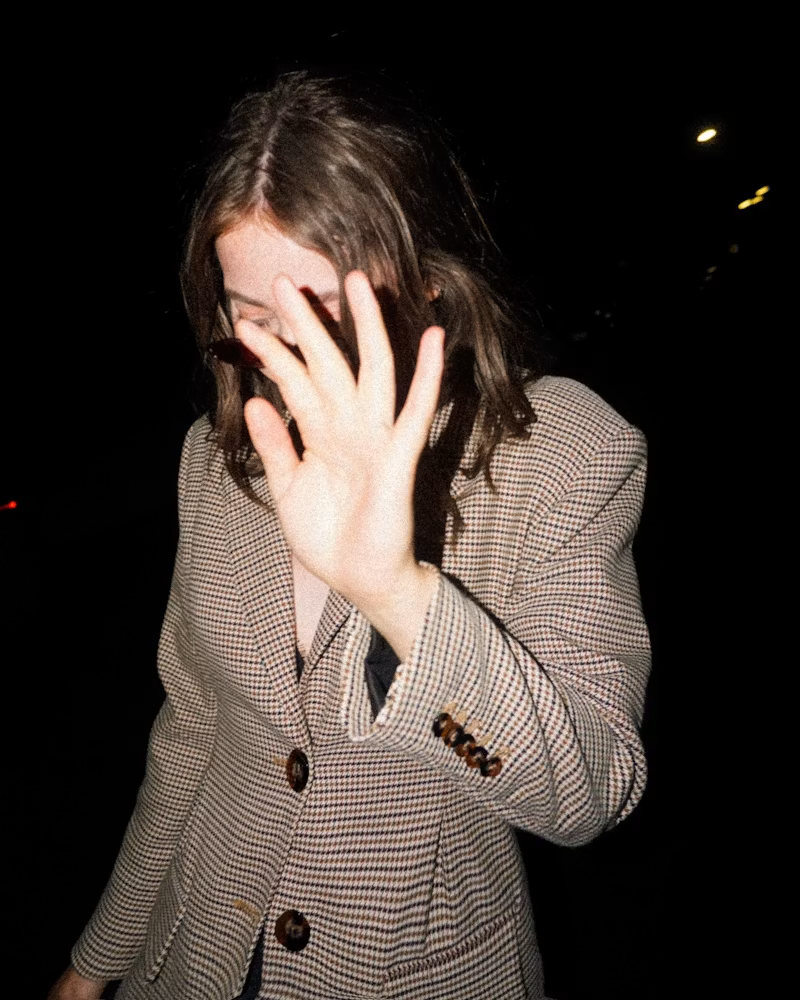
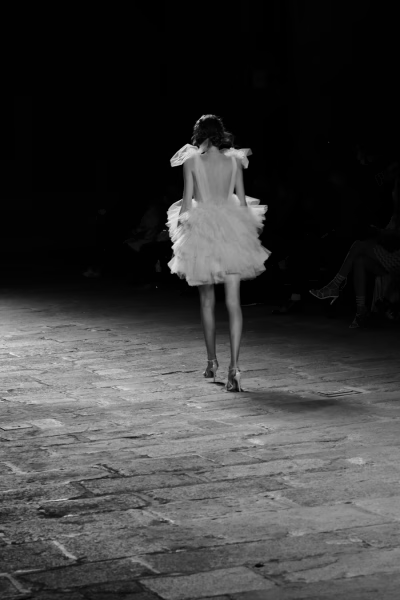
For decades, fashion magazines served as portals into worlds shaped by designers and the models who brought their visions to life. A Vogue cover could feel like a revelation: a new face, a striking silhouette, a fresh interpretation of beauty. Models were muses – sometimes enigmatic, sometimes iconic – but always central to the craft. Today, that landscape looks radically different. In the era of celebrity saturation, A-list actors and digital influencers have taken over the covers, the campaigns and even the runways. While the shift has made fashion more culturally ubiquitous, it has also left the industry feeling increasingly inauthentic.
The pivot did not happen overnight. As social media tightened the feedback loop between brand and consumer, fame became a form of currency too powerful to ignore. A star with 50 million followers offers instant global visibility – something a model, no matter how skilled, can not easily replicate. For brands battling for attention in a noisy market, the logic was irresistible.
Today, the faces fronting major campaigns are less likely to be the next breakout model and more likely to be a block-buster actor, chart-topping musician or influencer who built a personal brand online. The result? Fashion imagery that often prioritizes name recognition over narrative.
Nowhere is this shift more visible than on magazine covers. Glossy titles that once introduced new talent and set visual agendas have become, in many ways, extensions of pop culture. Instead of a singular fashion moment crafted by the collaboration of photographer, stylist and model, we see the same roster of celebrities cycling through covers – promoting movies, albums or simply their personas.
The covers still generate attention, but they rarely surprise. The spark of discovery, the sense of seeing a new face or perspective, has dimmed. Publications that once shaped culture are now more likely to reflect it, chasing viral moments rather than curating aesthetics.
Part of what longtime fans mourn is the loss of mystery. The supermodels of past decades were known, but not overly-known. Their personas did not overshadow the collections they wore. Their job was to animate the clothes – to translate a designer’s world into movement, emotion and form. Because audiences did not have constant access to their lives, the fashion spoke louder than the fame.
Today’s celebrity-driven imagery carries the opposite effect. When an actor or influencer appears in a campaign, their public narrative precedes them. The clothes become secondary, absorbed into the gravitational pull of celebrity identity. Instead of asking, “Who is that?” or “What story is this image telling?” Audiences already know the character and the plot, and the fashion becomes scenery.
The core tension is this: craftsmanship and creativity thrive in spaces where imagination leads. But as follower counts become metrics of value, fashion risks becoming another branch of the entertainment industry, one where visibility beats vision.
This is not to say celebrities have no place in fashion. Many have genuine style and artistic curiosity. But when they dominate every campaign and every cover, the visual ecosystem flattens. Designers lose the neutral canvas models once offered, and magazines lose their power to introduce new beauty ideals, new narratives and new talent.
The fashion world does not need to banish celebrities to reclaim authenticity, it just needs to restore balance. Imagine covers where a celebrated actor shares space with an emerging model. Campaigns where designers cast muses who elevate the clothes, whether they are famous or not. Runways that prioritize movement, expression and artistry over viral moments.
At its best, fashion is a dialogue between visionaries – designers, photographers, stylists and models working together to build something new. The industry has not lost that potential; it has simply been drowned out by the volume of celebrity culture.
Many readers and fashion lovers are ready for a return to discovery, to artistry, to the thrill of seeing a model who embodies a designer’s imagination rather than a star whose fame eclipses it. Fashion has always been fluid, and I believe the pendulum may swing back.
After all, mystery – that rare electric spark – is still one of fashion’s most powerful tools. It just needs a place to shine again.
Support Student Media
Hi! I’m Hannah Planey, A Magazine’s editor-in-chief. My staff and I are committed to bringing you the most important and entertaining news from the realms of fashion, beauty and culture. We are full-time students and hard-working journalists. While we get support from the student media fee and earned revenue such as advertising, both of those continue to decline. Your generous gift of any amount will help enhance our student experience as we grow into working professionals. Please go here to donate to A Magazine.