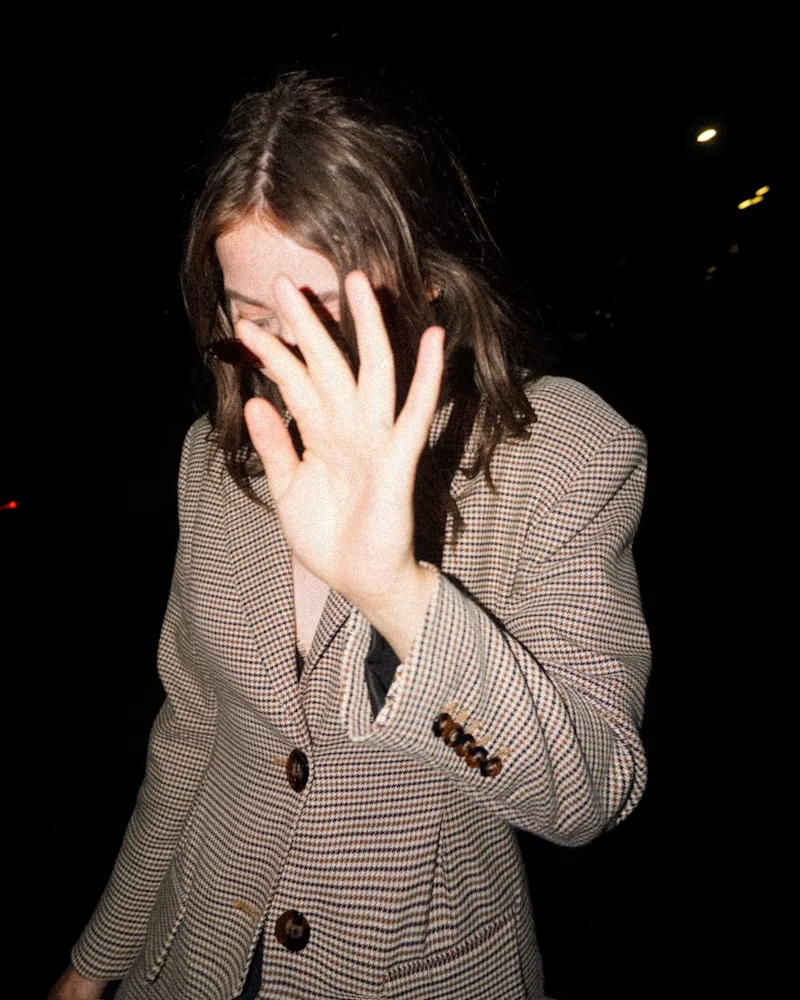
Walk into almost any Gen Z bedroom and it’s obvious: we live half in our phones and half in our self-expression, and our rooms reflect both.
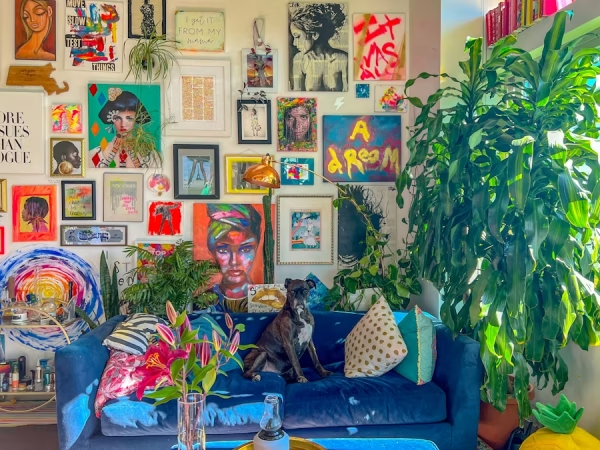
We adore walls covered in posters, art prints and half-finished collages that were made on wine night, shelves overflowing with thrifted trinkets, sentimental objects and various gifted ceramics and couches piled with colorful, patterned pillows that never match on purpose. Gen Z rooms mix mid-century modern pieces with, well, modern.
Notice the neon signs, playful lamps and whatever Facebook Marketplace delivered that week. You’ll find jewelry hung like décor, plants scattered across windowsills and side tables and a vintage colored glass dish by the door that somehow ends up holding keys, earrings and the lip gloss you’ve used once but can’t throw out.
Consider the 2010s aesthetic of warm string lights outlining every window, perfectly spaced photo walls, a full-body mirror plastered with Lululemon and Beats stickers and the obligatory faux-fur saucer chair. Then, set all of this against stark white walls, a white comforter and an obscene amount of fuzzy white pillows.
Gen Z rooms take the 2010s foundation and build something richer on top of it. We’re not decluttering, we’re collecting to curate. We’re turning our spaces into extensions of ourselves, filled with memory, highlighting identity.
Part of Gen Z’s relationship with “stuff” comes from the way we grew up. We were raised on arranging Instagram grids, designing Tumblr collages, sculpting Pinterest aesthetics and fabricating TikTok room tours where you could set the stage to prove your aesthetic. Bedrooms became the first place where we could experiment with identity, so of course, they’re cluttered with everything that shaped us.
As Maura Judkis of The Washington Post points out, “cluttercore” emerged as a rejection of blank, Scandi-style minimalism, replacing beige calm with bright colors, bold patterns and “organized, beautiful chaos” that feels more honest to how people actually live.
The parking tickets held up by magnets that mysteriously appeared are cluttering the fridge, the memory of your old roommates thrifting and shoving a jean-upholstered couch into the back of your hatchback with the trunk fully open on the drive home still makes you laugh.
The mug a friend left at your house party somehow became your go-to for your morning coffee, a tiny way of holding onto moments we don’t want to lose. Behind all of it is a whole story about who we were when we picked it up, one of the countless little ways we hold onto our lives and express them in our spaces.
According to Nicole Kinning of “Kansas City Magazine,” cluttercore is “the trendy antithesis to minimalism,” a shift away from the white-box interiors and toward embracing collected items that don’t always match but still feel like you. In other words: empty walls are emotionally inept. Maximalism gives us something to attach to, something that makes a room feel lived in.
A generation balancing school, work, friendships, burnout and an entire digital life isn’t coming home to a room with one plant and a white bedspread. We want our space to show the parts of us that don’t always make it into public. Our rooms become the one place that actually feels like ours.
The thing about Gen Z rooms is that they’re rarely intentionally decorated, they’re accumulated. You don’t go out one day and build a room like this on purpose. It happens slowly: One thrift find, one drawing from a friend, one weird little object that made you laugh in a store.
Over time, those things stack and settle into something that accidentally becomes your personality. The room stops being a design project and starts becoming a timeline.
Elizabeth Fogarty of “Better Homes & Gardens” calls this the “messy girl aesthetic,” describing it as intentional chaos. Lived in and personal rather than perfectly staged, we’re not collecting things to impress anyone.
We’re collecting because it feels like us, because it marks time, because it helps us remember the version of ourselves who bought the Sonny Angel or pinned the random photo booth strip to the wall or kept that napkin doodle from someone we used to love.
Minimalism hides the details. Maximalism displays it. Gen Z displays it proudly.
Support Student Media
Hi! I’m Hannah Planey, A Magazine’s editor-in-chief. My staff and I are committed to bringing you the most important and entertaining news from the realms of fashion, beauty and culture. We are full-time students and hard-working journalists. While we get support from the student media fee and earned revenue such as advertising, both of those continue to decline. Your generous gift of any amount will help enhance our student experience as we grow into working professionals. Please go here to donate to A Magazine.