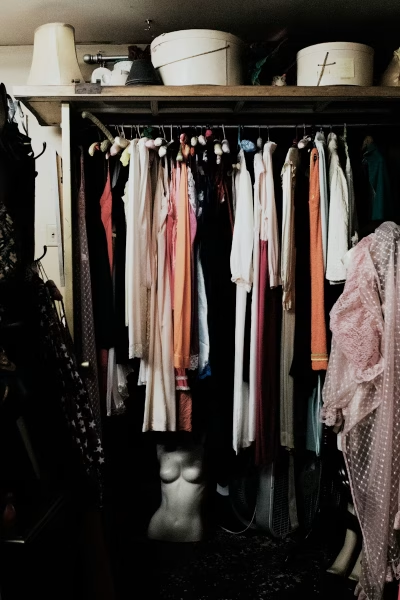
Every morning, we reach into our closets, drawers, or even piles of laundry and choose the pieces that will make up our outfit for the day. Some days it is a single look; other days it’s three outfit changes before noon. But whether we realize it or not, the clothes we put on each morning quietly shape how we feel, think and even how others see us.
This idea is known as “enclothed cognition.” Coined after a 2012 Northwestern University study, the term describes how what we wear can subtly influence our psychological state and behavior. Fashion, it turns out, is not just about style, it is about self-perception.
Fashion protects us, expresses us and helps us reclaim who we are. The psychological effects of clothing consistently reinforce this truth, our outfits don’t just cover us, they affect us.
Color and pattern play a huge role. Bright, bold tones with tons of patterns often lift our spirits, while darker more muted shades with little to no pattern tend to calm us. Studies suggest that yellow has the strongest mood-boosting effect, while blue evokes peace and serenity. Sometimes a single color can transform the way we carry ourselves through the day.
But color isn’t the only factor. The fit and shape of what we wear also reveal and can even influence our emotions. Professor Karen Pine, author of Mind What You Wear: The Psychology of Fashion, found that women are more likely to choose looser, less revealing clothing when feeling down and tighter, more form-fitting clothes when feeling confident or happy. Interestingly, when participants changed their clothing style, after a while their mood often followed suit.
Clothing also shapes how we see ourselves. A German study found that people wearing formal attire described themselves as more organized and strategic, while those in casual clothes saw themselves as relaxed or even clumsy. And in that same Northwestern study, participants wearing identical white coats performed differently depending on how the coat was described. Those told it was a doctor’s coat performed significantly better than those told it was a painter’s coat. The takeaway? The meaning we assign to what we wear can influence our performance and mindset.
Fashion can also serve as a simple act of self-care. Choosing what to wear gives us something to look forward to each day, a creative moment of control, especially when we’re feeling low. Depression often makes basic tasks like showering or dressing feel impossible, but finding joy in style and treating clothing as a form of self-expression rather than a chore, can help lift that fog. When we wear something that makes us feel confident or comfortable, we’re giving ourselves a small push forward.
And of course, our clothing speaks before we do. It can attract others or push them away, signal belonging or independence, openness or reserve. It is a language in its own. I personally know this to be true as I met my best friend my second day of college, all because she liked my top and asked if she could sit with me.
In the end, what we wear is not just about fashion, it is about psychology. Our clothing choices can change our mood, influence our confidence and shape the way we connect with the world. So next time you are getting dressed, think about how your outfit might make you feel, not just how it makes you look. Maybe swap the sweatpants for trousers now and then, your mindset might thank you.
Support Student Media
Hi! I’m Hannah Planey, A Magazine’s editor-in-chief. My staff and I are committed to bringing you the most important and entertaining news from the realms of fashion, beauty and culture. We are full-time students and hard-working journalists. While we get support from the student media fee and earned revenue such as advertising, both of those continue to decline. Your generous gift of any amount will help enhance our student experience as we grow into working professionals. Please go here to donate to A Magazine.