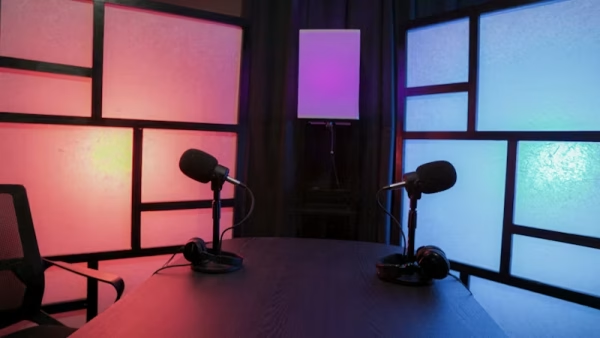
I have started listening to podcasts every day, and they have really changed the way I engage with the media. Their presence in my life spans entertainment, advice and even makes long stretches of time enjoyable. This reflects a larger movement in the entertainment industry, and how people consume content today.
Throughout the past few years, I have noticed that podcasts have been seeing a resurgence of popularity in mainstream media. More and more, we see celebrities, influencers and even magazine publishers (such as A Podcast) start new media channels to better promote their brand and keep up this new form of communication with fans and listeners.
Due to this shift in engagement, many celebrities are exploring this space, not only for their own personal interests, but also for the interests of their brand. Podcasts give a platform for artists to connect with their audience on a more personal level and also communicate their stories without constraint.
The term “podcasting” originated in the early 2000s to describe this new form of radio broadcasting. By 2005, the tech company Apple was beginning to release thousands of free podcasts on iTunes, as it became more user-friendly and popular. As time has gone on, it has evolved more and more from a niche hobby to mass engagement.
According to Kendall Breitman at Riverside, “More than 584 million people listened to podcasts in 2025, with numbers expected to reach 619 million by 2026.” Additionally, “34% of Americans listen to an average of 8.3 podcast episodes per week, and 83% spend more than 9 hours listening weekly.”
Podcasts have become a dominant force in how we communicate and consume media, especially among younger generations. Gen Z and young adults illustrate this shift, now making up most avid podcast consumers and signaling a broader change in media behavior.
With the increase in interest, Amy Poehler’s podcast “Good Hang with Amy Poehler” won the first Best Podcast award at the 2026 Golden Globes.
Other popular podcasting channels include “Anything Goes” with Emma Chamberlain, “Call Her Daddy” with Alex Cooper and “Therapuss” with Jake Shane.
In addition to the popularity in listening, podcasts have even stretched to having videos, as it has boosted discoverability with platforms such as YouTube and Netflix. Having these visual cues caters to our modern consumption habits of longer-form media, while also being able to clip the content into shorter-form videos as well.
One of my favorite video podcasts is “Royal Court” with Brittany Broski, not only for her comedic effect, but also for how she visually understands the aesthetic of her podcast and what makes everyone on and off the screen feel the most comfortable.
“So much of Hollywood and the internet is about gotcha and punching down, especially on women,” Broski stated in an interview with Drew Barrymore on the Drew Barrymore Show. “My approach from the beginning has been that I am never going to punch down on a guest. If you want something cut, we’re gonna cut it.”
Broski also made the point that her goal is to humanize these celebrities that we often find “untouchable” or out of reach for us as fans. Dressing these guests up in silly costumes adds to the effect that everyone is just trying to have fun.
Podcasts are a new and exciting way for viewers to strengthen their relationships with their favorite celebrities and influencers. It provides an organic environment, making not only the one being interviewed comfortable but the listener comfortable as well.
Support Student Media
Hi! I’m Hannah Planey, A Magazine’s editor-in-chief. My staff and I are committed to bringing you the most important and entertaining news from the realms of fashion, beauty and culture. We are full-time students and hard-working journalists. While we get support from the student media fee and earned revenue such as advertising, both of those continue to decline. Your generous gift of any amount will help enhance our student experience as we grow into working professionals. Please go here to donate to A Magazine.