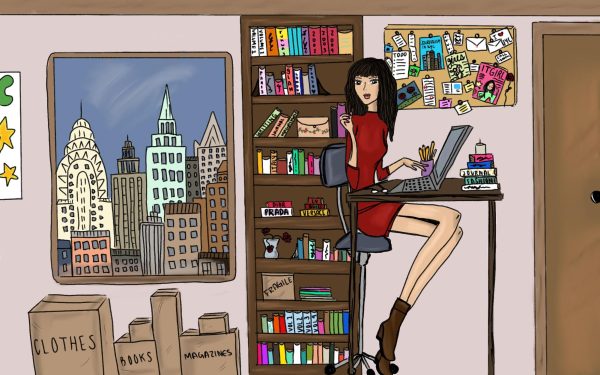
Before “influencer” was everyone’s dream job, there was another kind of it-girl: the magazine girl. She lived in the city, dressed like every day was an editorial photoshoot and built a life out of deadlines, bylines and perfectly timed coffee runs. Films like “13 Going on 30” and “How to Lose a Guy in 10 Days” didn’t just tell stories, they sold a vision of journalism that was equal parts ambition and aesthetic.
But this image didn’t happen by accident, it was carefully constructed through the media young women were consuming.
The fashion portrayed in these films taught audiences one thing: journalists have style. Whether it was Andie Anderson’s iconic yellow dress or Jenna Rink’s Versace rainbow dress, the outfits were always a staple. Clothing functioned as more than just wardrobe, it became a visual shorthand for ambition, transformation and belonging in a fast-paced, urban world.
Just as important as what these women wore, were the places they existed. The city itself became a part of the appeal. To be a journalist in these films was to be constantly in motion, whether it be chasing stories or building a life that looked just as compelling as the work itself.
Media and film have shown stereotypical news rooms with the aesthetic pile of papers, polished meetings where pitches based on lifestyle are given and sudden meet-cutes with the guy next door happened once a week. While this all could happen, it’s far from a modern journalist’s reality.
Kat Thomas, a sophomore journalism and theater performance major, said media portrayals of journalism often feel outdated.
“It’s this big thing of I get to do whatever I want and I get to write whatever I want, do whatever I want and go wherever I want, but everything is digital now,” Thomas said. “So, they don’t portray movies in the digital aspect.”
She added that much of the reality of journalism is left out of film. “The media doesn’t really portray how much work goes into it behind the scenes, especially how many late nights you’re up writing all these papers.”
In fact, entry-level journalists in the United States earn an average of around $43,000 to $51,000 a year, depending on the source and location. These are figures that contrast sharply with the polished, high-fashion lifestyles depicted on screen.
In films like “The Devil Wears Prada,” the chaos of the workplace is stylized, fast-paced and demanding, yet still visually appealing. Deadlines feel exhilarating rather than exhausting and pressure becomes part of the allure rather than a source of burnout.
Beyond individual films, these portrayals shaped a broader cultural understanding of journalism as a lifestyle defined by style, social relevance and city living. The glamorous wardrobes, that chic lifestyle and the idea of living in New York City all contributed to the image of the ‘it-girl’ journalist. Someone who is not only successful but effortlessly fashionable and socially connected.
However, this image overlooks the level of effort required to sustain such a career. In reality, success in journalism often depends on building reliable connections, spending long nights researching and maintaining a strong sense of determination. The polished lifestyle presented on screen rarely reflects the work happening behind it.
Think of influencers as the modern-day magazine girls. Instead of glossy bylines and editorial offices, they have Instagram grids and TikTok feeds, sharing everything from stylish tops to snippets of daily life. Their content spreads fast, even reaching millions of views, and, just like those old-school “it-girls,” they turn everyday moments into carefully curated stories.
Where magazine girls relied on printed pages to showcase style and ambition, influencers rely on personal branding. Each post, story or reel is a carefully curated narrative of fashion, lifestyle and social currency. The editorial aesthetic hasn’t disappeared, it has migrated from newsrooms to feeds, where likes and followers replace readership.
The “it-girl” journalist of the early 2000s didn’t vanish, she just changed platforms. What once lived on glossy pages now exists in curated feeds, where storytelling is faster, more personal and constantly evolving. But beneath the filters and aesthetics, the same truth lingers: whether in a newsroom or on a screen, creating compelling stories still demands intention, effort and a sharp eye for the world. The dream was never just about the clothes or the city, it was always about the story and who gets to tell it.
Support Student Media
Hi! I’m Hannah Planey, A Magazine’s editor-in-chief. My staff and I are committed to bringing you the most important and entertaining news from the realms of fashion, beauty and culture. We are full-time students and hard-working journalists. While we get support from the student media fee and earned revenue such as advertising, both of those continue to decline. Your generous gift of any amount will help enhance our student experience as we grow into working professionals. Please go here to donate to A Magazine.