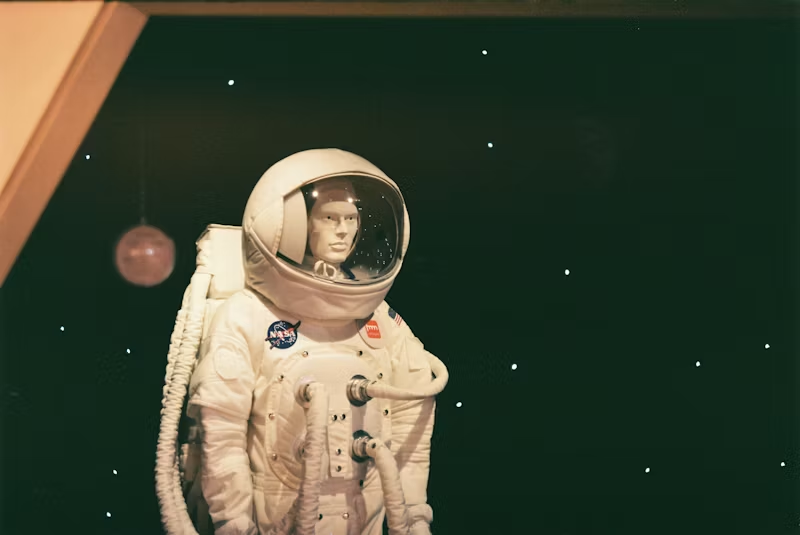
Every year, when the coveted autumn season rolls around, we all anticipate what to dress up as for Halloween. Some people spend weeks planning their costumes, gathering materials and doing practice runs to make sure they look perfect for the big night.
Many college-aged Halloween partygoers even make sure to have multiple costumes for each party they attend, emphasizing how much we all value and love dressing up for Halloween.
It is the only time when you can be anyone or anything. It is the one night a year that displays such an explosion of creativity and individuality.Even when people dress up as the same thing, everyone has their own unique spin on it. But how did we get here? When and how did Halloween costumes begin?
Well, to understand the origins of Halloween costumes, we must go back in time about 2500 years. Halloween began as an ancient Celtic festival called Samhain (“sow-win”). Samhain, celebrated from Oct. 31 to Nov. 1, is a pagan celebration that is anchored by spirituality.
Commemorating the end of the harvest, Samhain also served as a crossover between the living and the spirit world, as it was believed that the barrier separating the two realms would falter, allowing spirits to make a visit to the living.
The celebrations focused on ancestor spirits, but those were not the only entities that could join in on the fun. Evil or mischievous spirits were able to cross as well, and the Celts would wear disguises, or what we now call costumes, to confuse evil spirits and ward them away.
However, these costumes were not for amusement like ours are today; they wore them out of fear in the hope it would help them survive the night. Donned in animal heads and skins and masks made from leftover fabric, they almost impersonate the unwanted spirits to throw them off their trail.
As time went on, Paganism in Ireland dissolved and was forcibly replaced by Christianity, and Samhain was rebranded as All Hallows Eve. The message of the celebration was practically the same, as Christianity just adopted the holiday and framed it to their own standards.
They also added two more holidays, the days directly after Samhain, Nov. 1 and 2, which are All Saints Day and All Souls Day. Costumes were still disguises and were for protection against evil spirits kidnapping or harming anyone.
Fast-forwarding to the late 19th and early 20th centuries, more and more Scottish and Irish people began emigrating to America. Thus, bringing the Pagan customs of Samhain to the American people. This is where it began to transform into something new. Instead of a spiritual holiday, it became one where the community could come together for parties and games. However, the practice of disguising yourself stuck around.
But now, rather than to ward off spirits, costumes were meant to maintain anonymity, not to be seen committing pranks and other mischievous behavior while celebrating. These costumes were inspired by folklore, ghosts and were homemade.
The shift in these disguises becoming proper costumes, and the mass production of them, came to be in the 1930s. This was due to trick-or-treating gaining more popularity as a Halloween tradition. Instead of homemade disguises, there were now referential costumes that represented the time, all ready to wear and packaged in a box.
These costumes would include Dracula, Mickey Mouse, characters from comics and classic figures like cowboys and princesses. As television and movies continuously grew as a part of the culture, post-WWII in the 1950s, companies like Ben Cooper and Halco produced more affordable costumes of new characters. These costumes became more common and popular than the classic figures of Halloween like witches and ghosts.
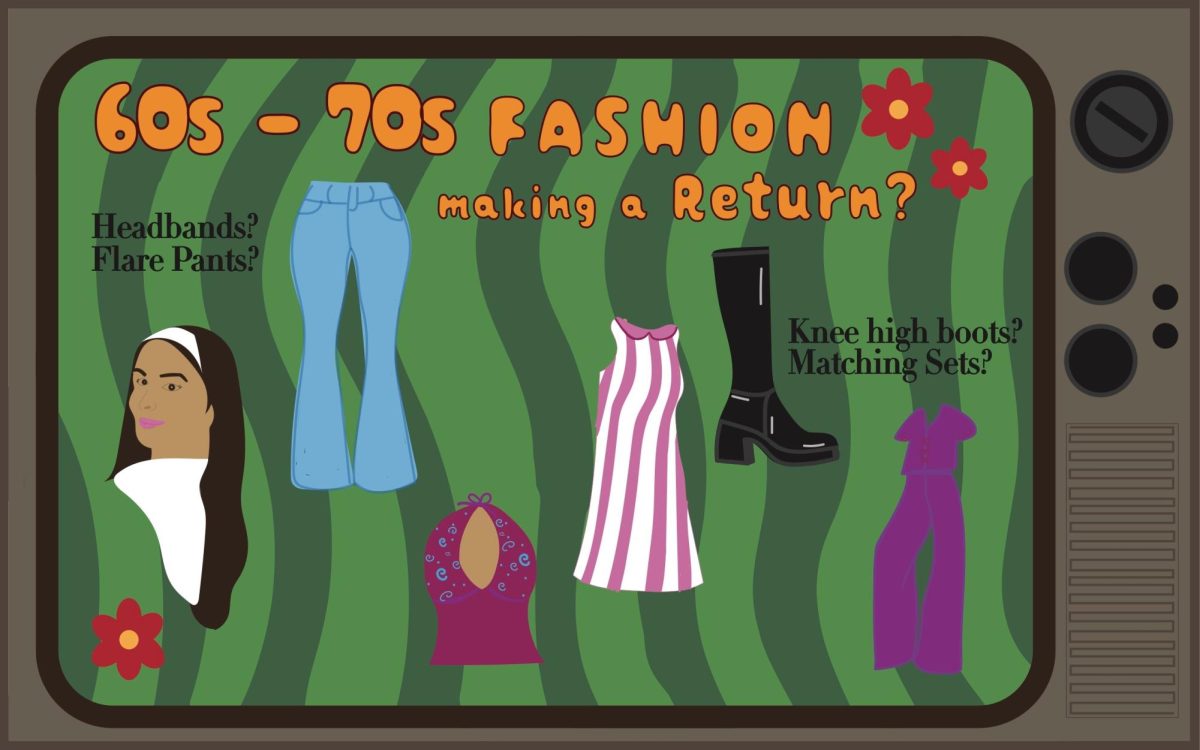
The rise of political activism in the ‘60s and ‘70s created a new trend within Halloween costumes. Instead of characters or spooky figures, people began dressing up as forms of political or social expression. Their costumes reflected the movements of the time or challenged traditional standards.
These costumes included wearing a Richard Nixon mask, which was meant to critique his political moves, and dressing as historical figures to make a statement or pay homage to the social movement to which the figures belonged. This was also a time when self-expression for the LGBTQ+ community began to rise because, in most places, you could not cross-dress, but Halloween allowed members to outwardly be themselves, even for just one night.
In our present time, Halloween costumes have become a more ambiguous thing. While the original motif characters are still used as costumes, and many people use characters from our modern era of movies and TV, there are also so many instances of specific and niche costumes that reference memes or just pop culture moments that you wouldn’t understand unless you are in on the joke. We are in an age where anything can be a Halloween costume, making dressing up for the holiday more accessible and creative than ever before.
The evolution of Halloween costumes from Celtic disguises as protection from evil spirits to today’s pop culture homages, shows that Halloween costumes directly mirror the essence of their time. What began as simple protection has blossomed into a symbol of creativity, self-expression and imagination.
So, as each generation gets to celebrate Halloween and reinterpret it in their own image, the tradition of dressing up for Halloween will carry on the ancient roots while adding their own timely, unique interpretations.
Support Student Media
Hi! I’m Hannah Planey, A Magazine’s editor-in-chief. My staff and I are committed to bringing you the most important and entertaining news from the realms of fashion, beauty and culture. We are full-time students and hard-working journalists. While we get support from the student media fee and earned revenue such as advertising, both of those continue to decline. Your generous gift of any amount will help enhance our student experience as we grow into working professionals. Please go here to donate to A Magazine.